
Intel Xeon E3-1230 v5 im Test: Auf Asus-Gaming-Board mit Server-Chip zur Empfehlung?
5/9
Zusatztests
CPU trifft Mainstream-GPUs (960/R9 380)
Der Wechsel auf eine Mittelklasse-Grafikkarte vom Schlag AMD Radeon R9 380 und Nvidia GeForce GTX 960 platziert den Xeon E3-1230 v5 exakt inmitten aller anderen Quad-Core-CPUs. Da bei diesen Tests nur die Grafikkarte limitiert, wird der Prozessor zum Nebenschauplatz.
-
Intel Core i7-3770K:
-
Nvidia GeForce GTX 96028,08
-
AMD Radeon R9 38033,12
-
-
Intel Core i5-5675C:
-
Nvidia GeForce GTX 96027,64
-
AMD Radeon R9 38033,24
-
-
Intel Pentium G3440:
-
Nvidia GeForce GTX 96027,60
-
AMD Radeon R9 38033,32
-
-
Intel Xeon E3-1230 v5:
-
Nvidia GeForce GTX 96027,44
-
AMD Radeon R9 38032,92
-
-
Intel Core i5-4690K:
-
Nvidia GeForce GTX 96027,36
-
AMD Radeon R9 38032,64
-
-
Intel Celeron G1840:
-
Nvidia GeForce GTX 96027,28
-
AMD Radeon R9 38032,96
-
-
Intel Core i5-6600K:
-
Nvidia GeForce GTX 96027,24
-
AMD Radeon R9 38033,08
-
-
Intel Core i7-6700K:
-
Nvidia GeForce GTX 96027,16
-
AMD Radeon R9 38033,24
-
-
Intel Core i7-5820K:
-
Nvidia GeForce GTX 96027,08
-
AMD Radeon R9 38032,72
-
-
Intel Core i5-2500K:
-
Nvidia GeForce GTX 96026,96
-
AMD Radeon R9 38033,04
-
-
Intel Core i7-4790K:
-
Nvidia GeForce GTX 96026,96
-
AMD Radeon R9 38032,76
-
-
Intel Xeon E3-1231 v3:
-
Nvidia GeForce GTX 96026,92
-
AMD Radeon R9 38032,88
-
-
Intel Core i7-2600K:
-
Nvidia GeForce GTX 96026,76
-
AMD Radeon R9 38032,64
-
-
Intel Core i7-5930K:
-
Nvidia GeForce GTX 96026,72
-
AMD Radeon R9 38032,56
-
-
Intel Core i3-4330:
-
Nvidia GeForce GTX 96026,64
-
AMD Radeon R9 38032,64
-
-
AMD FX-8350:
-
Nvidia GeForce GTX 96026,44
-
AMD Radeon R9 38032,20
-
-
Intel Core i5-5675C:
-
Nvidia GeForce GTX 96053,72
-
AMD Radeon R9 38050,72
-
-
Intel Core i7-6700K:
-
Nvidia GeForce GTX 96053,04
-
AMD Radeon R9 38051,88
-
-
Intel Core i7-4790K:
-
Nvidia GeForce GTX 96049,92
-
AMD Radeon R9 38046,44
-
-
Intel Core i7-5930K:
-
Nvidia GeForce GTX 96049,80
-
AMD Radeon R9 38046,92
-
-
Intel Core i7-5820K:
-
Nvidia GeForce GTX 96049,56
-
AMD Radeon R9 38046,20
-
-
Intel Core i5-6600K:
-
Nvidia GeForce GTX 96044,56
-
AMD Radeon R9 38042,28
-
-
Intel Core i5-4690K:
-
Nvidia GeForce GTX 96043,03
-
AMD Radeon R9 38040,95
-
-
Intel Xeon E3-1231 v3:
-
Nvidia GeForce GTX 96041,36
-
AMD Radeon R9 38040,56
-
-
Intel Core i7-2600K:
-
Nvidia GeForce GTX 96039,36
-
AMD Radeon R9 38037,92
-
-
Intel Xeon E3-1230 v5:
-
Nvidia GeForce GTX 96039,24
-
AMD Radeon R9 38041,56
-
-
Intel Core i7-3770K:
-
Nvidia GeForce GTX 96039,24
-
AMD Radeon R9 38038,92
-
-
Intel Core i5-2500K:
-
Nvidia GeForce GTX 96037,08
-
AMD Radeon R9 38038,08
-
-
Intel Pentium G3440:
-
Nvidia GeForce GTX 96035,16
-
AMD Radeon R9 38035,08
-
-
AMD FX-8350:
-
Nvidia GeForce GTX 96030,72
-
AMD Radeon R9 38029,80
-
-
Intel Celeron G1840:
-
Nvidia GeForce GTX 96030,24
-
AMD Radeon R9 38029,88
-
-
Intel Core i3-4330:
-
Nvidia GeForce GTX 96028,32
-
AMD Radeon R9 38027,04
-
CPU trifft High-End-GPUs (980 Ti/Fury X)
Keine Überraschungen fördert der Vergleich der als Standard verwendeten GeForce GTX 980 Ti mit einer Radeon R9 Fury X zutage. Das, was in den anderen Spieletests ermittelt wurde, lässt sich auch auf die schnellste AMD-Grafikkarte übertragen.
-
Intel Core i5-5675C:
-
Nvidia GeForce GTX 980 Ti70,76
-
AMD Radeon Fury X61,44
-
-
Intel Core i7-4790K:
-
Nvidia GeForce GTX 980 Ti70,57
-
AMD Radeon Fury X59,60
-
-
Intel Core i7-3770K:
-
Nvidia GeForce GTX 980 Ti70,48
-
AMD Radeon Fury X61,04
-
-
Intel Core i5-4690K:
-
Nvidia GeForce GTX 980 Ti70,48
-
AMD Radeon Fury X59,64
-
-
Intel Xeon E3-1230 v5:
-
Nvidia GeForce GTX 980 Ti70,44
-
AMD Radeon Fury X61,04
-
-
Intel Core i7-5820K:
-
Nvidia GeForce GTX 980 Ti70,36
-
AMD Radeon Fury X60,04
-
-
Intel Xeon E3-1231 v3:
-
Nvidia GeForce GTX 980 Ti70,32
-
AMD Radeon Fury X59,24
-
-
Intel Core i7-5930K:
-
Nvidia GeForce GTX 980 Ti70,28
-
AMD Radeon Fury X59,96
-
-
Intel Core i7-6700K:
-
Nvidia GeForce GTX 980 Ti70,16
-
AMD Radeon Fury X60,96
-
-
Intel Core i5-6600K:
-
Nvidia GeForce GTX 980 Ti70,00
-
AMD Radeon Fury X61,04
-
-
Intel Core i3-4330:
-
Nvidia GeForce GTX 980 Ti70,00
-
AMD Radeon Fury X58,08
-
-
Intel Core i7-2600K:
-
Nvidia GeForce GTX 980 Ti68,96
-
AMD Radeon Fury X59,64
-
-
Intel Core i5-2500K:
-
Nvidia GeForce GTX 980 Ti68,80
-
AMD Radeon Fury X59,68
-
-
AMD FX-8350:
-
Nvidia GeForce GTX 980 Ti67,12
-
AMD Radeon Fury X59,00
-
-
Intel Pentium G3440:
-
Nvidia GeForce GTX 980 Ti66,08
-
AMD Radeon Fury X57,32
-
-
Intel Celeron G1840:
-
Nvidia GeForce GTX 980 Ti59,48
-
AMD Radeon Fury X51,36
-
-
Intel Core i5-5675C:
-
Nvidia GeForce GTX 980 Ti54,64
-
AMD Radeon Fury X52,20
-
-
Intel Core i7-6700K:
-
Nvidia GeForce GTX 980 Ti51,80
-
AMD Radeon Fury X48,76
-
-
Intel Core i5-6600K:
-
Nvidia GeForce GTX 980 Ti50,36
-
AMD Radeon Fury X42,00
-
-
Intel Core i7-4790K:
-
Nvidia GeForce GTX 980 Ti49,16
-
AMD Radeon Fury X48,16
-
-
Intel Core i7-5820K:
-
Nvidia GeForce GTX 980 Ti48,36
-
AMD Radeon Fury X45,04
-
-
Intel Core i7-5930K:
-
Nvidia GeForce GTX 980 Ti47,60
-
AMD Radeon Fury X47,72
-
-
Intel Core i5-4690K:
-
Nvidia GeForce GTX 980 Ti46,56
-
AMD Radeon Fury X42,40
-
-
Intel Xeon E3-1230 v5:
-
Nvidia GeForce GTX 980 Ti44,28
-
AMD Radeon Fury X43,60
-
-
Intel Xeon E3-1231 v3:
-
Nvidia GeForce GTX 980 Ti42,28
-
AMD Radeon Fury X40,42
-
-
Intel Core i7-3770K:
-
Nvidia GeForce GTX 980 Ti41,08
-
AMD Radeon Fury X38,72
-
-
Intel Core i7-2600K:
-
Nvidia GeForce GTX 980 Ti40,44
-
AMD Radeon Fury X37,84
-
-
Intel Core i5-2500K:
-
Nvidia GeForce GTX 980 Ti36,40
-
AMD Radeon Fury X36,24
-
-
Intel Pentium G3440:
-
Nvidia GeForce GTX 980 Ti35,52
-
AMD Radeon Fury X37,12
-
-
AMD FX-8350:
-
Nvidia GeForce GTX 980 Ti31,36
-
AMD Radeon Fury X30,04
-
-
Intel Celeron G1840:
-
Nvidia GeForce GTX 980 Ti30,04
-
AMD Radeon Fury X30,28
-
-
Intel Core i3-4330:
-
Nvidia GeForce GTX 980 Ti28,88
-
AMD Radeon Fury X28,24
-
CPUs im SLI-Test in UHD-Auflösung
Zur Markteinführung hatten die Skylake-Prozessoren in Zusammenarbeit mit Nvidias Grafikkarten noch mit Kinderkrankheiten zu kämpfen, mit aktualisierten Treibern funktioniert das Zusammenspiel nun aber.
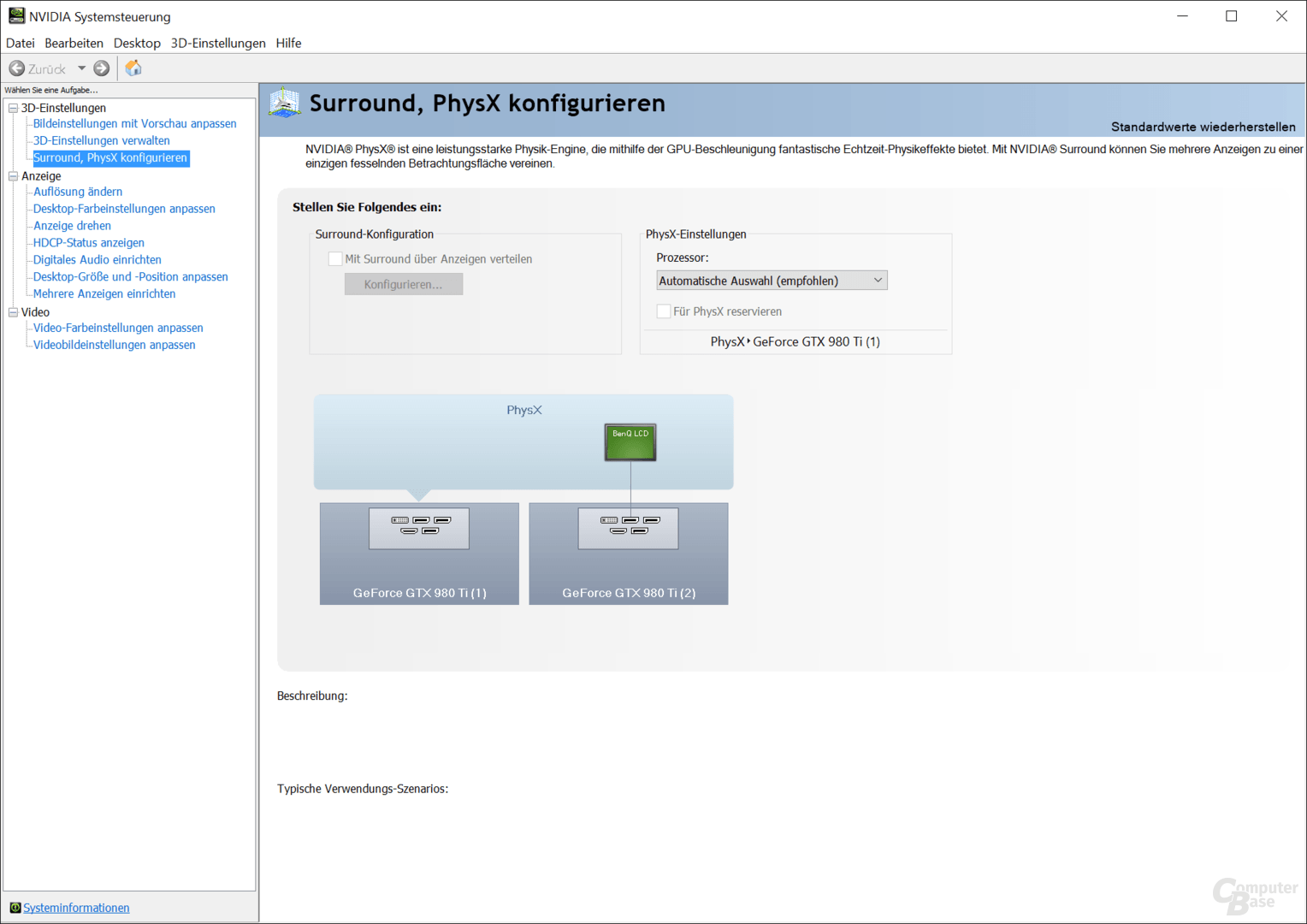
Dem Xeon E3-1230 v5 bleibt diese Möglichkeit derzeit aber versperrt, da das Mainboard von Asus zwar Multi-GPUs unterstützt, allerdings nur von AMD. Die fehlende SLI-Zertifizierung zeigt sich unter Windows 10 prompt, da der Modus nicht aktiviert werden kann. Die zweite GeForce GTX 980 Ti kann deshalb lediglich als PhysX-Beschleuniger genutzt werden.
-
-
Intel Core i7-4790K39,00
-
Intel Core i5-5675C38,96
-
Intel Xeon E3-1231 v338,84
-
Intel Core i7-3770K38,84
-
Intel Core i7-6700K38,60GeForce 355.98
-
Intel Core i3-433038,48
-
Intel Core i5-4690K38,40
-
Intel Pentium G344038,24
-
Intel Core i5-6600K38,20GeForce 355.98
-
Intel Core i7-5930K38,00
-
Intel Celeron G184037,76
-
Intel Core i7-5820K37,68
-
AMD FX-835036,92
-
Intel Core i5-2500K27,76
-
Intel Core i7-2600K27,60
-
Intel Xeon E3-1230 v50,00keine Board-Unterstützung
-
-
-
Intel Core i7-4790K45,56
-
Intel Core i7-6700K45,32GeForce 355.98
-
Intel Core i5-5675C44,96
-
Intel Core i7-5930K43,76
-
Intel Core i7-5820K43,68
-
Intel Core i5-4690K40,92
-
Intel Xeon E3-1231 v338,72
-
Intel Core i7-2600K36,44
-
Intel Core i5-6600K36,32GeForce 355.98
-
Intel Core i7-3770K35,52
-
Intel Core i5-2500K33,44
-
Intel Pentium G344031,44
-
AMD FX-835027,08
-
Intel Celeron G184025,48
-
Intel Core i3-433025,14
-
Intel Xeon E3-1230 v50,00keine Board-Unterstützung
-
